Your Rezume Never Stood a Chance
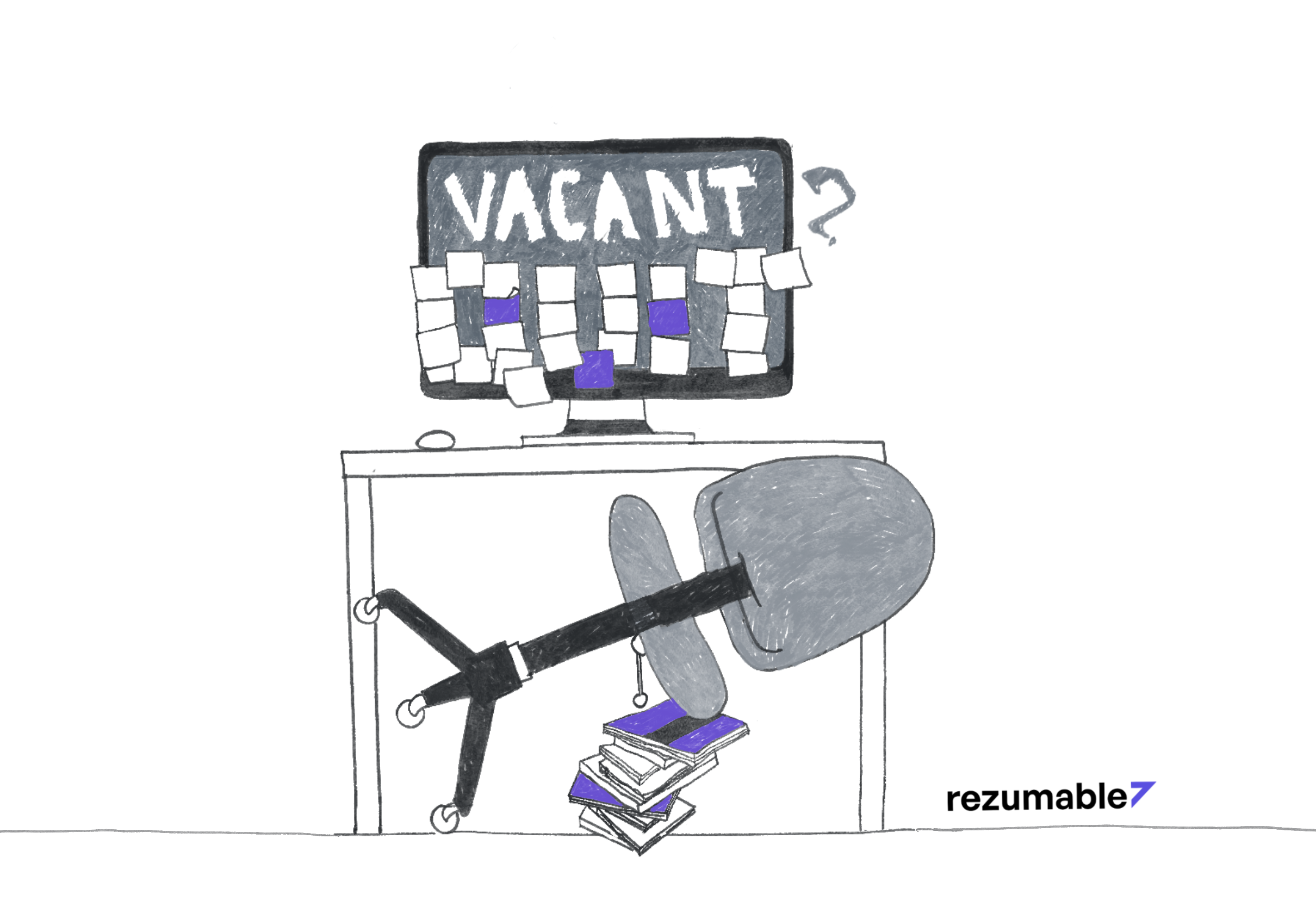
Somewhere in the space between clicking “submit” and waiting for a reply, an algorithm you will never meet is quietly deciding your fate. It doesn’t rest nor does it get tired of resumes. According to a major new study from Stanford’s Institute for Human Centered AI, it might be quietly discriminating against you based on your race too.
The numbers behind this claim are really hard to ignore. Researchers tracked 3.4 million people who submitted 4 million job applications across 1,700 postings at 150 employers spanning eleven industries. Every single one of those applications passed through AI hiring tool built by the same their party vendor. This wasn’t a lab simulation and a deeper look inside the system revealed that systems now screen vast majority of American job seekers. 90% of U.S. employers reportedly use AI to sort and rank candidates, and most of them lean on a small handful of vendors to do it.
What the Data Actually Showed us
What the researchers found should give every job seeker a pause. Applying the EEOC’s long standing four fifths rule, flags discrimination when one group is recommended at less than 80% of rate of the most favored group, the team discovered that 26% of Black applicants and 50% Asian applicants applied to positions where the algorithmic discrimination was against their group. If the system recommended those candidates at the same rate, it recommended the most favored group, roughly fourthly thousand more applications from Blacks and Asian candidates would have advanced. That is not a rounding error but a mountain of missed opportunities for the hiring company.
Here’s the part that makes the story strange and very interesting. If you zoom out and average the vendor’s decisions across every job it screens, the bias seems to disappear entirely. It only surfaces once researchers examined individual positions in their own. Picture an algorithm that eagerly recommends Black applicants for warehouse roles but rarely recommends them for finance jobs. Averaged together, those two patterns cancel each other our on paper while real discrimination keeps happening underneath. It’s a reminder that big picture statistics can hide small picture injustice, and that the way we measure fairness shapes what we’re able to see at all.
The Pattern we Found Most Unsettling
There’s a second finding that feels almost dystopian once you site with it. When many employers rely on the same algorithmic vendor, something the researchers call an algorithmic monoculture, people whose apply to multiple jobs screened by that vendor become more likely to be rejected everywhere they apply. 10% of applicants who submitted four applications through the same vendor were turned down by every single one. We also compared that against an older, non-AI study of 83,000 applications sent to Fortune 500 companies, where rejection rated lined up almost exactly with what you’d expect from independent decision making. In other words, before the algorithms took over, one company’s “no” didn’t quietly become evyerone’s “no”. Now, for some applicants, it does.
Why does this matter beyond the raw numbers? Because AI hiring tools have quietly acquired three qualities that rarely belong together in high-stakes decisions. They are used almost everywhere, and they carry enormous consequences for people’s lives. They also remain largely invisible, tucked behind vendor contracts and proprietary code that neither applicants nor, often, employers fully understand.
The researchers behind the study, aren’t just arguing that AI hiring tools should disappear. Their arguments, and the one we came away agreeing with, is simpler and arguably more urgent. We need independent eyes on these systems, meaning a human intervention before they quietly reshape who gets hired and who doesn’t. As language models and autonomous agents get folded into hiring pipeline, the stakes of not looking closely will only grow.
The next time a rejection email arrives without explanation past midnight, it’s worth remembering that a human may never have read the resume at all. Somewhere upstream, a pattern was matched, a score was calculated, and a door was quietly closed. The unsettling part isn’t that machines make mistakes but it’s how confidently invisible those mistakes can be.
The Real Takeaway
AI hiring tools aren’t going away, and neither is the bias hiding inside them as per they have been trained. Until these systems are held to the same scrutiny as human decision makers, the burden fails on job seekers to stand out clearly, consistently and on their own terms. That’s exactly why Rezumable exist, to help you build a resume that speaks fluent to both the algorithm and the human who eventually reads it.
Research Referenced: Bommasani, R., Bana, S. H., Creel, K. A., Jurafsky, D., & Liang, P. (2026). AI Hiring Tools Can Yield Racial Bias and Systemic Rejection. Stanford HAI.
Yep, we did our homework. This isn’t a “trust us, bro” situation. It’s backed by actual Standard researchers who dug through 4 million real job applications, so you don’t have to. Want to nerd out on the full study? Give it a read right here: https://hai.stanford.edu/news/ai-hiring-tools-can-yield-racial-bias-and-systemic-rejection